
Pre-hire assessments: every HireBox test explained, with sample reports
What each test measures, when to use it, how to read the results — and real sample reports you can open.
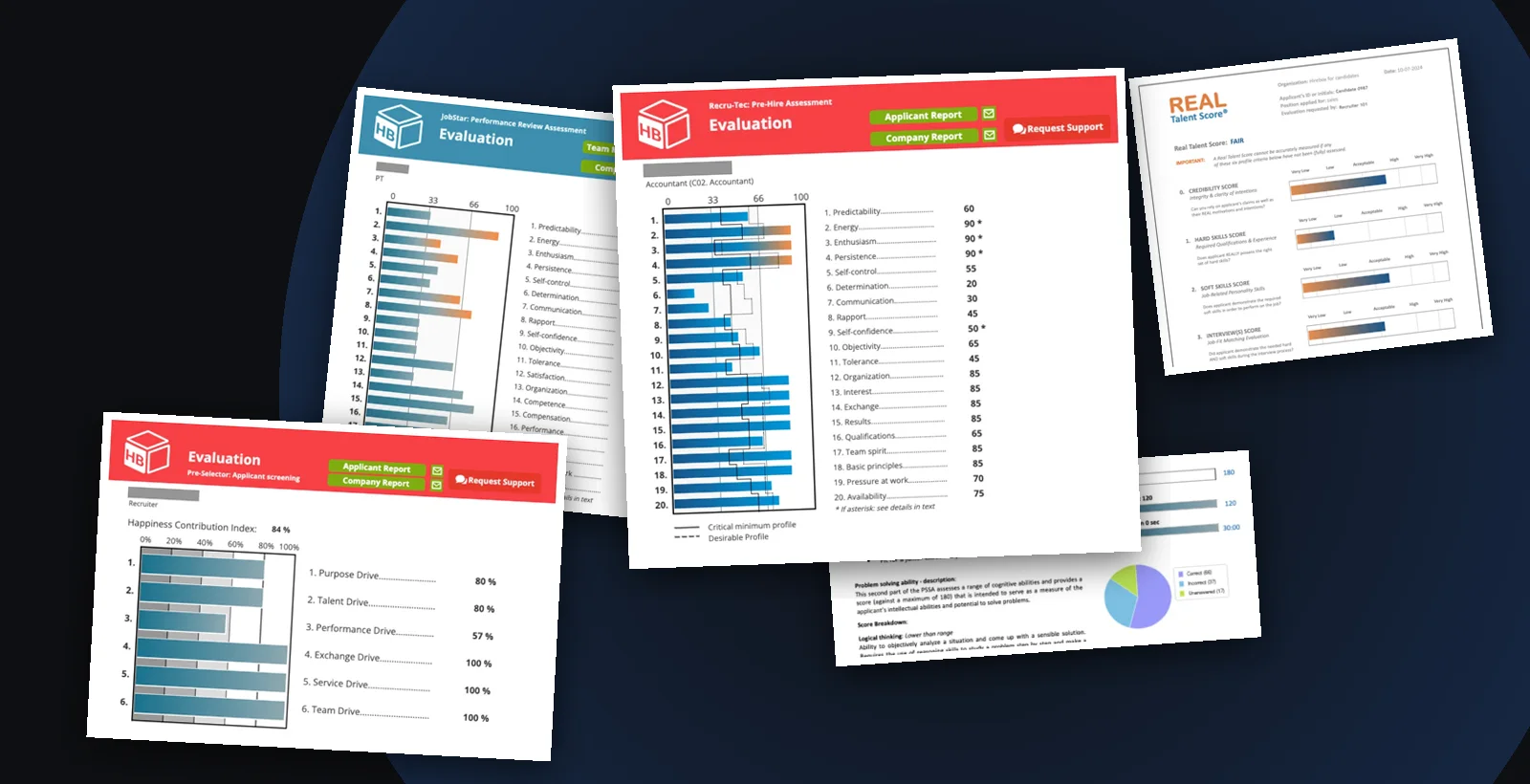
HireBox offers five pre-hire assessments and three employee assessments. The Pre-Selector, the D.A.A. and the Real Talent Score are free. The Recru-Tec™ soft skills assessment and the P.S.A.A. problem solving test come with the paid plans, as do the E.P.P.A., JobStar™ and Selling Star™ for your current team. No test decides for you: each one gives you facts and questions to check in the interview and with references.
WHICH TEST, WHEN
| Step of your hiring | Test | Time for the applicant | Plan |
|---|---|---|---|
| The résumé looks right | Pre-Selector™ | about 5 minutes | Free |
| Before the first interview | D.A.A. | about 5 minutes | Free |
| After the first interview | Recru-Tec™ | online test | Paid plans |
| Positions that solve problems | P.S.A.A. | online test | Paid plans |
| Before you make the offer | Real Talent Score™ | filled in by you | Free |
| An employee is not performing | E.P.P.A. | filled in by the manager | Paid plans |
| Performance review, coaching | JobStar™ | online test | Paid plans |
| Your sales reps | Selling Star™ | online test | Paid plans |
OUR RULE: A TEST NEVER DECIDES FOR YOU
• We never use a pre-hire assessment to judge an applicant or to make a selection decision. We never reject, or suggest rejecting, an applicant on test results alone.
• Pre-employment tests are one part of a complete selection procedure: résumé, interviews, tests, reference checks. They help you know and understand the applicant better.
• The best use of a result is to challenge the applicant: ask about what the test shows, high or low, and listen to the answer.
HireBox tests are built with AI and designed by hiring experts. Results support your judgment; they never replace it. Read our AI Diligence Statement →
The sample reports on this page come from the previous version of the HireBox platform. Reports from the new platform will replace them soon. What each test measures stays the same.
Pre-Selector™ — the 5-minute pre-screening assessment
What it measures
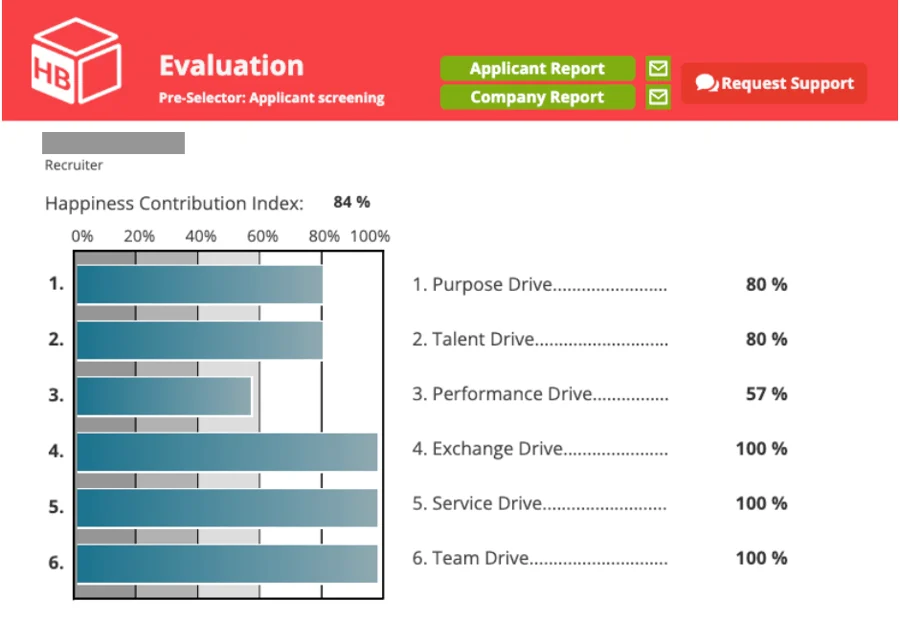
A fast pre-screening assessment, the same for every applicant. It evaluates each applicant against 6 universal traits of character and attitude that make people happier at work and help the people around them succeed. Together they give one score: the Happiness Contribution Index™ — how able and willing the applicant is to contribute to the success and happiness of your team and your organization.
When to use it
On applicants whose résumé or application qualifies them, before the phone or face-to-face interview, so you can prepare your questions. You can email it once you have pre-qualified someone, or make it part of your application process (many job boards let you add a test).
How to read the results
The report gives a couple of questions for every trait. Ask them when a trait is very high (95% to 100%) or very low (below 35%). Can an applicant try to look better than they are? Yes. The suggested questions quickly show whether the answers were genuine and whether the overall index can be relied on. The list of the applicant’s answers is at the end of every report.
D.A.A. — Duplication Ability Assessment
What it measures
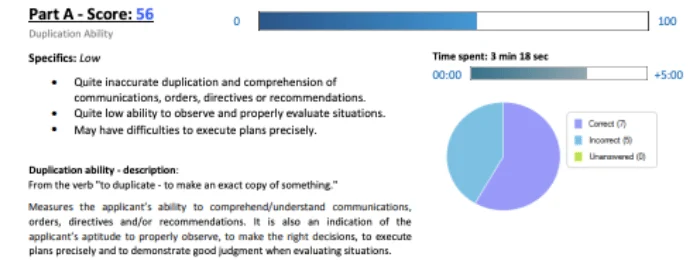
“To duplicate”: to make an exact copy of something. The D.A.A. measures the applicant’s ability to understand communications, orders and directives exactly as they were given, and to recognize priorities and what matters most. It also indicates the applicant’s aptitude to observe properly, to make the right decisions, to execute plans precisely and to show good judgment.
When to use it
Before the first interview, together with the Pre-Selector. It is useful for every position: someone who does not duplicate what you ask will cost you time on every task.
In the previous version of the platform, duplication ability was Part A of the problem solving test. The sample shows both parts.
Recru-Tec™ — job-related soft skills assessment and employee personality test
What it measures
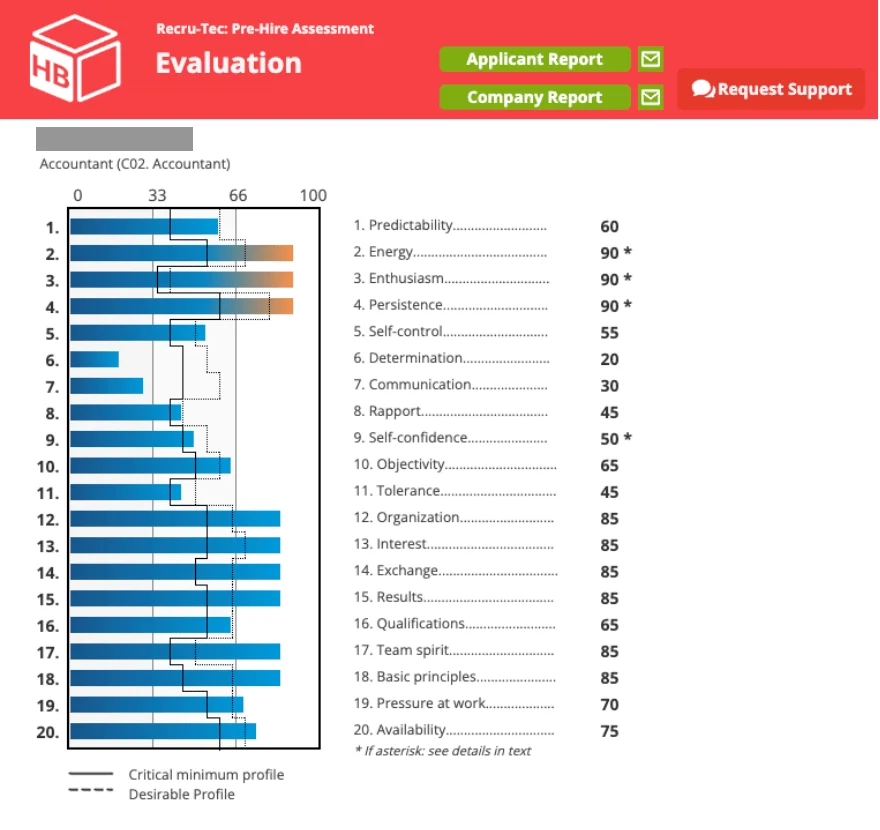
The Recru-Tec is a job-matching soft skills assessment. It measures 20 soft skills and personality traits against the specific position, because the same trait can help in one job and hurt in another. It is:
• a soft skills assessment — does the candidate have the soft skills this job needs?
• a productivity test — it shows personality traits that may get in the way of performance in this job;
• a reactivity test — how the person tends to react to job-related situations in your work environment.
Why soft skills? In a study of more than 20,000 new hires, Leadership IQ found that 89% of hiring failures came from attitude — coachability, emotional intelligence, motivation, temperament — and only 11% from technical skills.
Source: Leadership IQ, “Why New Hires Fail” — leadershipiq.com
When to use it
After a first face-to-face interview, once you decide the candidate is worth the next step. Tell them they will receive an email with a link to your testing platform, and ask them to complete the test before the second interview.
How to read the results
Read the report and note the strengths and the weaknesses for this job. Prepare the questions for the second interview, and the questions for previous employers. If the report suggests a weakness that matters for this job, check it — never take it as a verdict.
Want an expert to read a profile with you? Ask for our free Job Fit Analysis on one finalist.
P.S.A.A. — Problem-Solving Ability Analysis
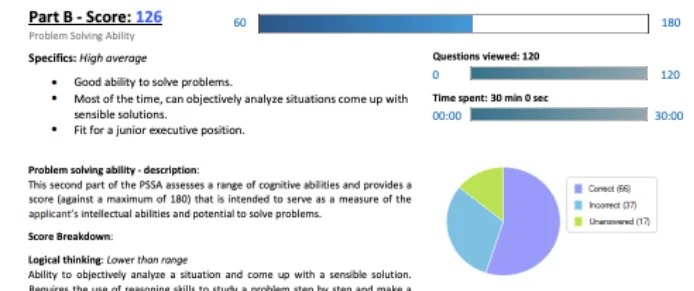
What it measures
A problem solving test that evaluates the applicant’s ability to solve problems. Like a cognitive ability test for employment, it gives a score broken down into four parts:
• Logical thinking — analyzing a situation objectively and reaching a sensible solution, step by step;
• Intellectual thinking — critical thinking, research and abstract reasoning, based on one’s knowledge;
• Vocabulary skills — reading, understanding and using the words of a language;
• Mathematical skills — adding, subtracting, multiplying and dividing.
When to use it
For executive, R&D and production, complex sales, accounting and finance, lead programming — and any position that requires solving problems.
The sample was produced under the test’s former name, P.S.S.A.
Real Talent Score™ — quality control before you make the offer
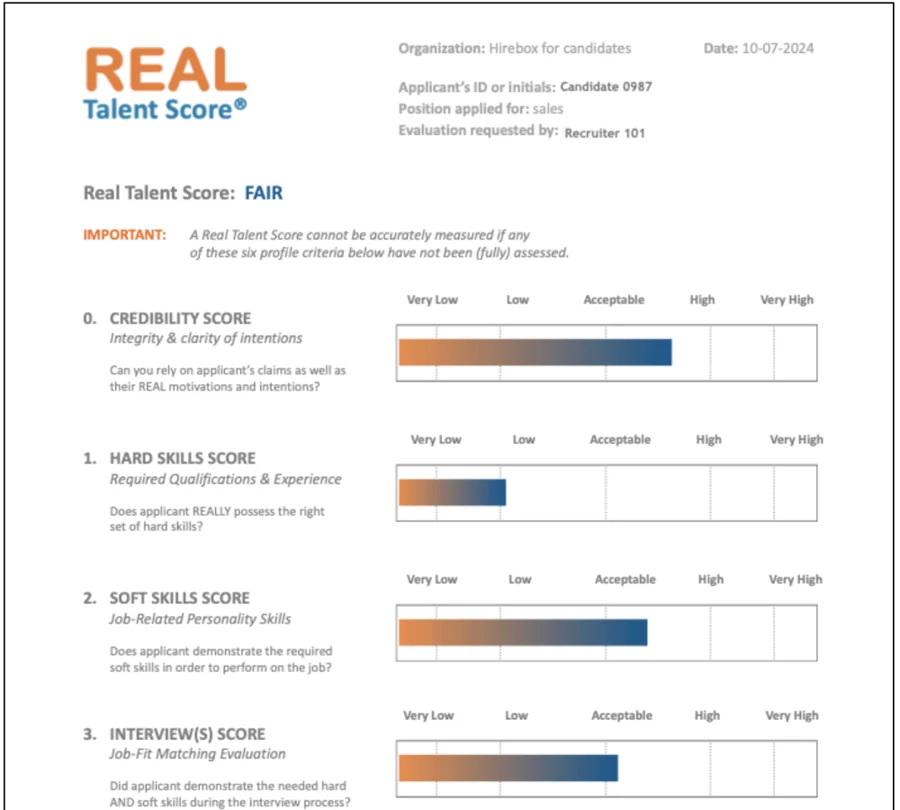
What it measures
The Real Talent Score is not filled in by the candidate: you (the recruiter, or a manager) fill it in at the end of the recruitment process. It is a last check on your potential hire — it tells you how precise and accurate your own evaluation of the candidate really is.
When to use it
Before you officially offer the position. The result shows how much you can trust your full evaluation of the candidate’s real potential for the position, and points to any weakness you may not have checked yet.
E.P.P.A. — Employee Performance Pre-Audit
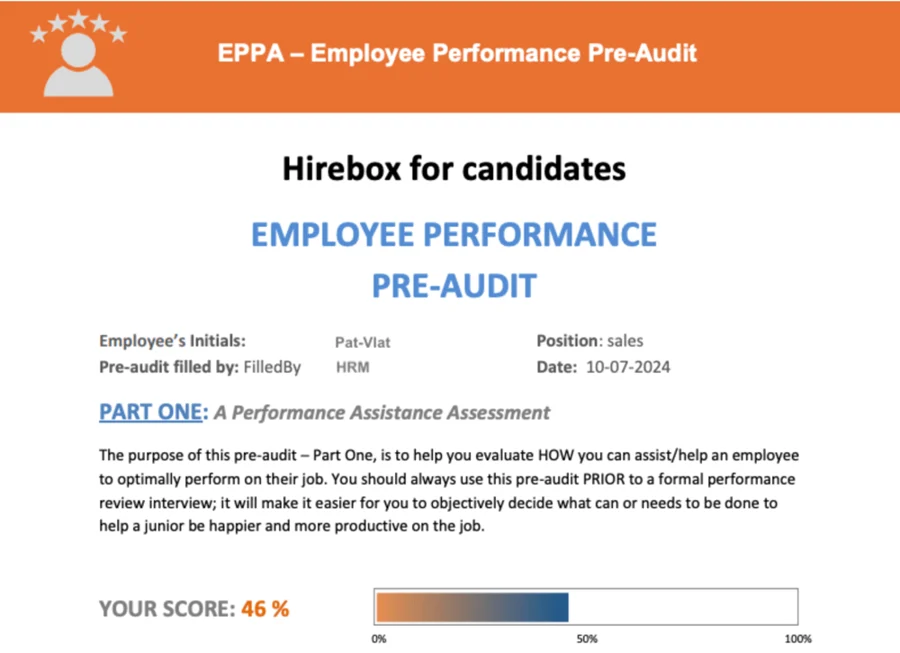
Filled in by the senior of an employee who is not as successful as they could be. It answers the question every owner asks: “What do we do now?” A good first step before a formal employee evaluation, it shows why the person may not perform as expected: the strengths and weaknesses in the way this employee is managed, and specific suggestions to improve their success and happiness on the job.
JobStar™ — employee assessment test for performance and job satisfaction
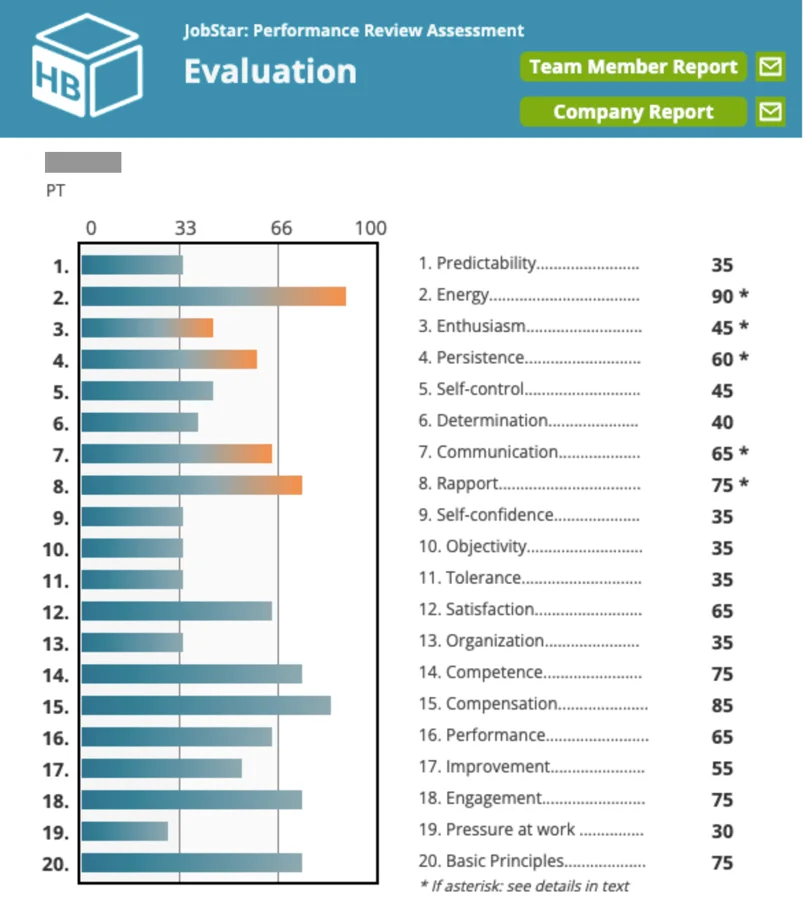
For your current personnel. The JobStar helps your people assess and improve important skills, to be happier and more productive on the job. It is a companion to your formal performance review, and it shows whether an employee needs more training or coaching. Its key feature: an analysis of the employee’s happiness on the job (or lack of it), with specific recommendations to increase it.
Selling Star™ — sales assessment test for your sales reps
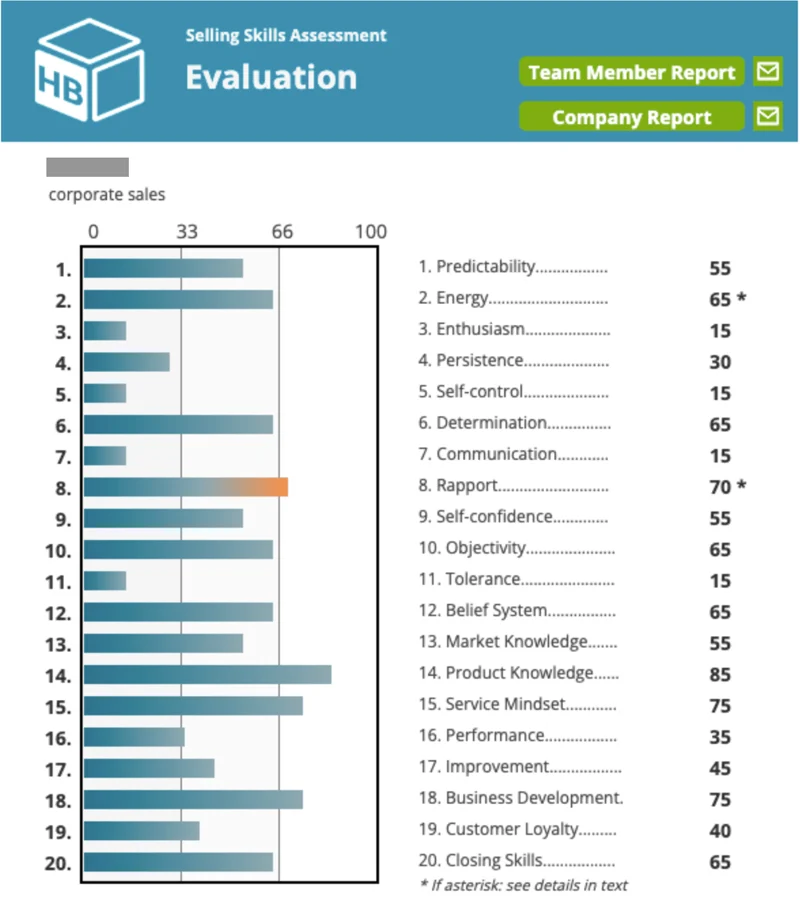
A sales skills assessment for the reps you already have, to help them improve their salesmanship and performance across the whole sales cycle. Our experience shows:
• 3 soft skills are innate to great salespeople. Without them, success in sales is almost impossible — and they are very hard, if not impossible, to teach;
• another 5 to 6 soft skills matter for success in sales. They can be taught, provided the rep has the first 3.
The Selling Star shows (1) whether a rep has the 3 vital soft skills to become a great sales rep, and (2) how much they need to improve on the others.
LEGAL CONSIDERATIONS
• Under equal employment opportunity and privacy laws, no candidate can be forced to take a personality or productivity test for selection purposes, and anyone who takes a test for selection purposes has a right to access the information provided.
• Our assessments are not designed, intended or used to discriminate because of race, color, religion, sex, national origin or any other protected characteristic. Make sure managers who use them understand what they measure, their limits, and how they fit a specific job.
• Laws differ from one state and one country to another. You remain responsible for how you use the results. See our Terms & Conditions and our AI Diligence Statement.
FREQUENTLY ASKED QUESTIONS
What is a pre-hire assessment?
A test the applicant takes during the hiring process — before or between interviews — to give you facts about their soft skills, attitude or problem solving ability that a résumé and an interview rarely show. At HireBox, the results are used to prepare your questions, never to decide alone.
Which pre-employment tests are free?
The Pre-Selector, the D.A.A. and the Real Talent Score are free forever, with no credit card. The Recru-Tec, the P.S.A.A. and the employee assessments come with the paid plans. See the plans →
Can an applicant cheat a personality test?
An applicant can try to look better than they are. That is why every report suggests questions for high and low scores: the answers in the interview quickly show whether the test was answered genuinely.
In what order should I use the tests?
Pre-Selector and D.A.A. when the résumé qualifies; Recru-Tec (and P.S.A.A. when the job requires it) after the first interview; reference checks; then the Real Talent Score just before you make the offer.
Run one test on a real candidate.
Create your free account: the Pre-Selector, the D.A.A. and the Real Talent Score stay free forever. No credit card.
Create my free account →Questions about a test or a result? Contact us · 877-831-2299